How Do You Follow Up With Leads Automatically?
You follow up with leads automatically by building sequences in your CRM that text, email, and create call tasks on a fixed schedule — and wiring them to trigger the instant a new lead arrives or a quote goes out. The lead gets a fast first touch and steady reminders for two or three weeks without anyone having to remember. Done right, it recovers jobs that would otherwise vanish.
Why Manual Follow-Up Fails
Everybody intends to follow up. Then the day happens — emergencies, dispatch, payroll — and the quote from Tuesday never gets chased. Most quotes that don’t close on the spot aren’t necessarily dead; some simply need a useful next touch. The fix isn’t more discipline, it’s removing the dependency on memory. The Small Business Administration’s marketing guidance recommends planning the customer experience and measuring results. Automation is one way to make that plan repeatable. We’ve made this case in how to stop losing leads.
Step One: Define the Triggers
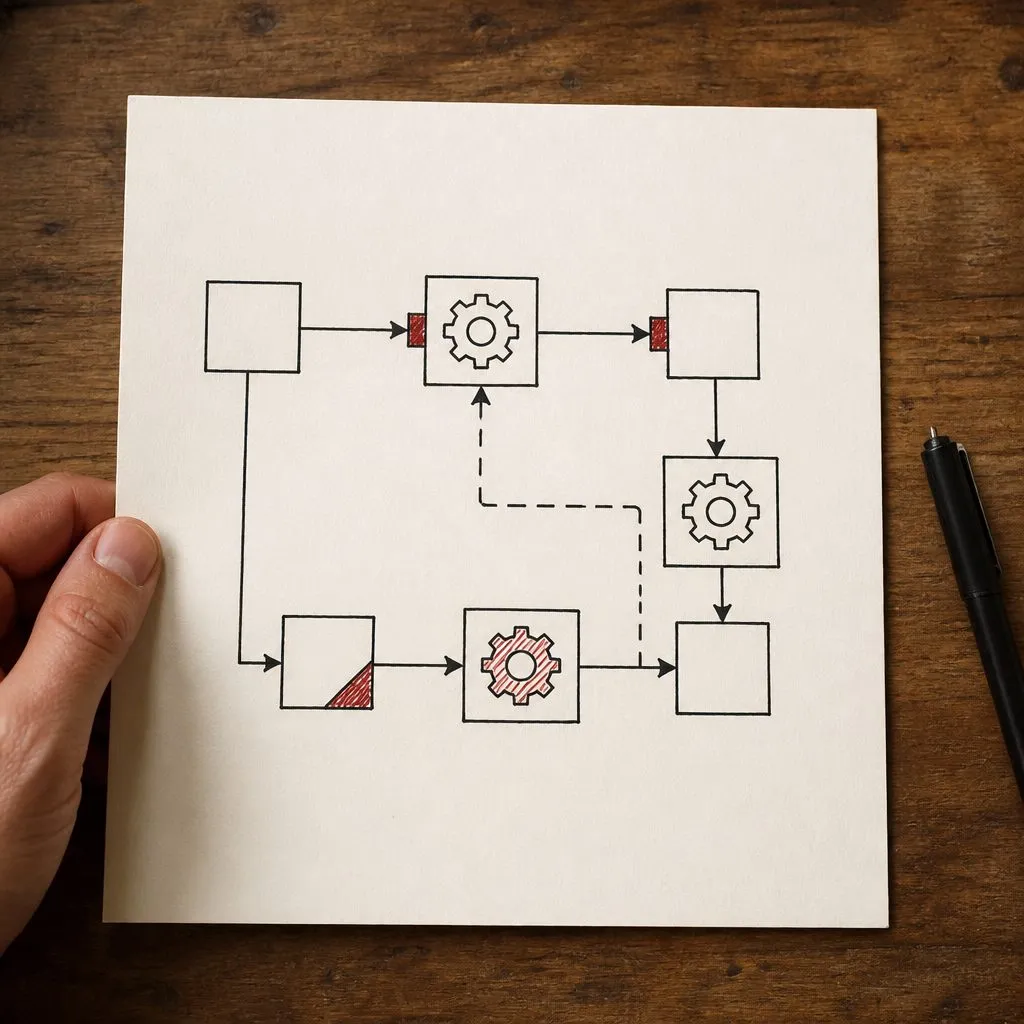
Automated follow-up starts with events. A new lead from any source — call, form, ad, chat — triggers the intake sequence. A sent quote triggers the quote-chase sequence. A no-show triggers a rebook sequence. A completed job triggers the review sequence. Each trigger is a moment in your pipeline; each sequence is the automatic reaction. Map those moments first; the messages come second. See how CRM automation actually works.
Step Two: Build the New-Lead Sequence
The most important one. Within 60 seconds of a lead arriving: an SMS — “Hey, this is [name] at [business], got your request about [service], when works for a quick call?” Within a few minutes if no reply: a short email with the same ask plus a booking link. Day one: a call task for a human. Day three: another text. Day seven: an email with a bit of proof — photos, reviews. Day fourteen: a final “still need help with this?” Speed on that first message is everything — see speed-to-lead benchmarks 2026 and what speed-to-lead is.
Step Three: Build the Quote-Chase Sequence
A quote with no follow-up leaves the decision hanging. Build a separate sequence triggered when the quote is marked sent: day one — “Did you get the quote? Happy to walk through it.” Day three — a call task. Day five — “Any questions before you decide?” Day ten — one final check-in. Then exit. The Federal Trade Commission’s online advertising guidance is worth a read so your quotes and any “limited time” language are clear and supportable. We go deeper for specific verticals in follow-up automation for mortgage and insurance leads and lead automation for solar companies.
Step Four: Wire the Exits
Every sequence must stop the moment the lead engages — replies, books, or asks to be left alone. A sequence that keeps firing after someone responds is the thing that gives “automation” a bad name. The Federal Communications Commission’s guidance on automated calls and texts covers the consent and opt-out side; the practical rule is simple: easy off-switch, instant stop on engagement, never message someone who told you to stop.
Step Five: Mix Channels and Keep It Human-Sounding
Text gets read; email carries detail; a real call closes. A good sequence uses all three and reads like a person wrote it — short, specific, no “Dear valued customer.” Call tasks for humans go in the sequence too, because some touches shouldn’t be automated. The point isn’t to remove people; it’s to make sure the routine reminders happen and free people for the conversations that matter. This is core to our automation work.
Step Six: Measure and Tune
Watch the numbers: how many sequenced leads reply, how many book, where in the sequence they drop. If everyone bails after touch two, your touch-two message is weak. If the quote-chase sequence converts at 30%, lengthen it. A CRM that reports this turns follow-up from set-and-forget into something you sharpen. See why a CRM is only as good as its automations.
How We Build Follow-Up for Clients
When a business comes to us, we map the triggers, build the new-lead and quote-chase sequences first (those move the most money), wire the exits so nobody gets spammed, write the messages in a human voice, and put reporting on top. Then we tune based on what the data says. It’s the difference between leads “in the CRM” and leads getting chased. See done-for-you CRM setup, our pricing, or contact us and we’ll sketch your sequences.
Frequently Asked Questions
What is automated lead follow-up? A pre-built sequence in your CRM that contacts a lead on a set schedule — a text within 60 seconds, an email on day one, a call task on day three, another text on day seven — triggered automatically when the lead arrives, with no one having to remember.
How many follow-ups should a sequence have? For service businesses, roughly five to eight touches over two to three weeks: fast first contact, then spaced reminders mixing text, email, and a couple of manual call tasks.
Will automated follow-up annoy people? Not if it is helpful, easy to opt out of, and stops when they reply or book. The annoying version is generic spam with no off-switch.
Do I need new software for this? You need a CRM with automation built in, plus a connected texting and email channel — a single well-configured platform handles the triggers, messages, and call tasks.
What should trigger a follow-up sequence? A new lead from any source triggers one. A sent quote triggers a separate one. A no-show triggers another. The triggers are events in your pipeline; the sequences are the automatic responses.
Related reading
- The complete local business marketing playbook - the full sequence this fits into
- How to stop losing leads to slow follow-up
- How fast should you respond to a new lead
- What is speed to lead and why it matters
- Speed-to-lead benchmarks 2026
- Missed-call text-back: the 60-second fix
- Our automation builds
Frequently asked questions
What is automated lead follow-up?
A pre-built sequence in your CRM that contacts a lead on a set schedule — for example a text within 60 seconds, an email on day one, a call task on day three, another text on day seven — triggered automatically when the lead arrives, with no one having to remember.
How many follow-ups should a sequence have?
For service businesses, roughly five to eight touches over two to three weeks works well: fast first contact, then spaced reminders mixing text, email, and a couple of manual call tasks. Most deals that close late close because someone followed up more than once.
Will automated follow-up annoy people?
Not if it is helpful, easy to opt out of, and stops when they reply or book. The annoying version is generic spam with no off-switch. A short, useful sequence that exits the moment someone engages is fine — and it beats the alternative, which is no follow-up at all.
Do I need new software for this?
You need a CRM with automation built in, plus a connected texting and email channel. You do not need a separate tool for every step — a single well-configured platform handles the triggers, the messages, and the call tasks.
What should trigger a follow-up sequence?
A new lead from any source should trigger one. A sent quote should trigger a separate one. A no-show should trigger another. The triggers are events in your pipeline; the sequences are the automatic responses to those events.
Need help applying this?
Bring us the website, search, or automation problem. You will speak directly with the person who scopes and builds the work.
Book a 30-minute call